


How to Measure for Cabinet Hardware: A Complete Guide to Getting It Right the First Time
Swapping out cabinet hardware is one of the fastest ways to update a kitchen or bath — but only if the new knobs and pulls line up with your existing holes, or you know exactly where to drill new ones. A measurement that's off by even a quarter inch can mean a crooked pull or a visible extra hole. This guide walks you through the tools, terminology, and placement standards you need to measure confidently, whether you're replacing hardware one-for-one or starting from scratch.
- Tape measure or a metal ruler (a fabric tape measure can stretch and throw off small measurements)
- Painter's tape (to mark placement before drilling)
- Pencil
- Center-finding ruler or a simple center-punch tool (optional, but helpful for symmetrical placement)
- Your existing hardware, if you're replacing like-for-like
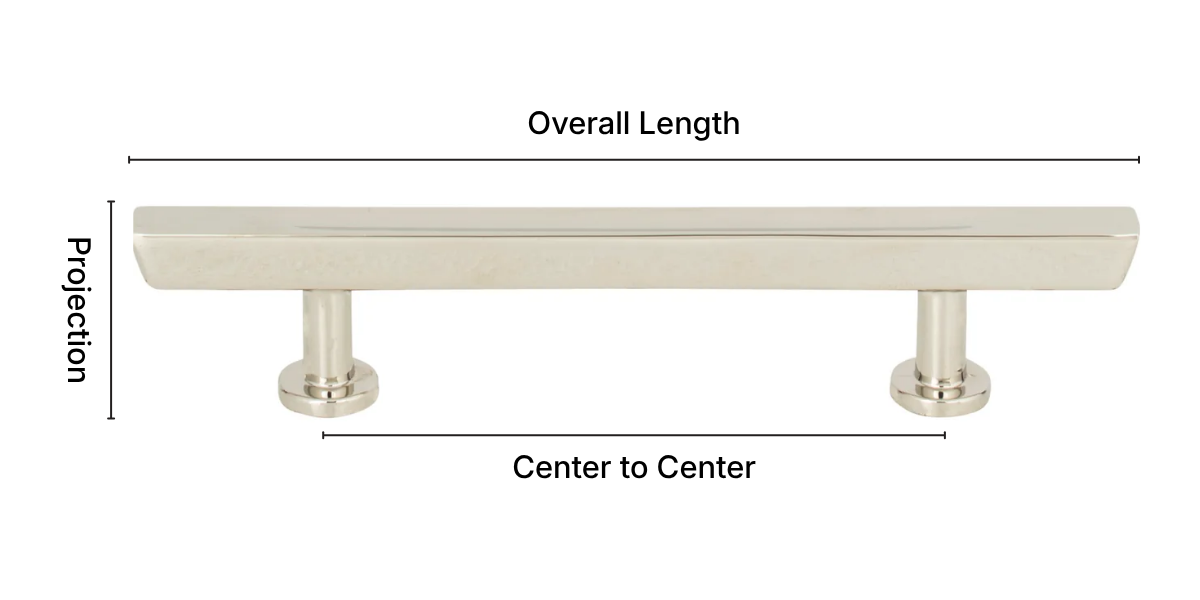
Understanding Center-to-Center (C-to-C) Measurement
Cabinet knobs are mounted with a single screw and require only one hole in the cabinet door or drawer. Because of this, knobs do not require spacing measurements. You simply choose the placement you prefer.
Cabinet pulls, on the other hand, use two screws and require two drilled holes. The measurement that matters most for pulls is the distance between these holes, called the center-to-center measurement.
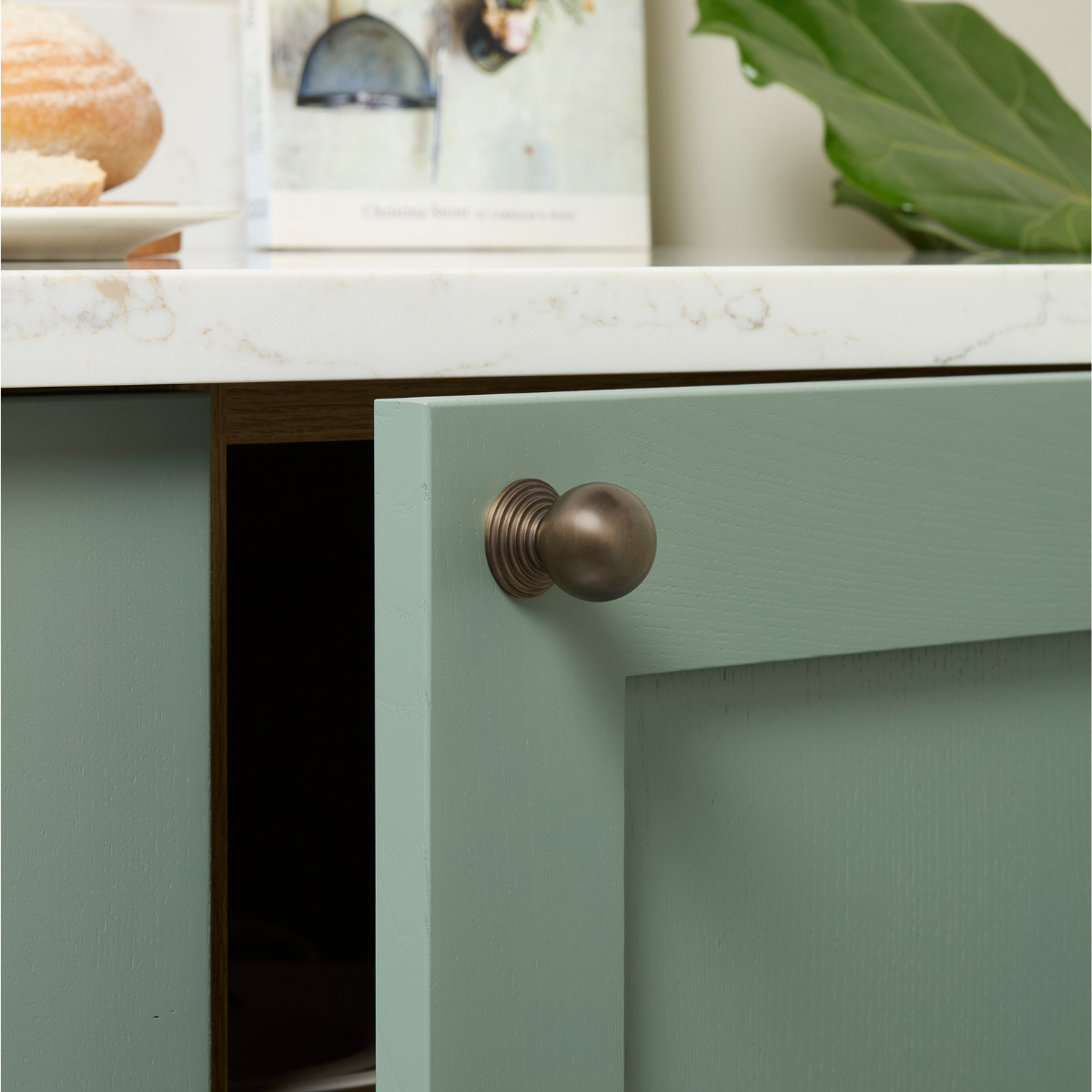
How to Measure for Cabinet Knobs
Most cabinet knobs use a single mounting hole, so placement is about position rather than spacing.
- Cabinet doors: Place the knob 2 1/4"–3" from both the top and side edge of the door, positioned on the corner nearest where the door opens (the "lead corner").
- Drawers: Center the knob both horizontally and vertically on the drawer face, or 2"–3" up from the bottom edge on taller drawer fronts.
- Consistency matters more than the exact number — pick one placement rule and use it on every door and drawer in the room.
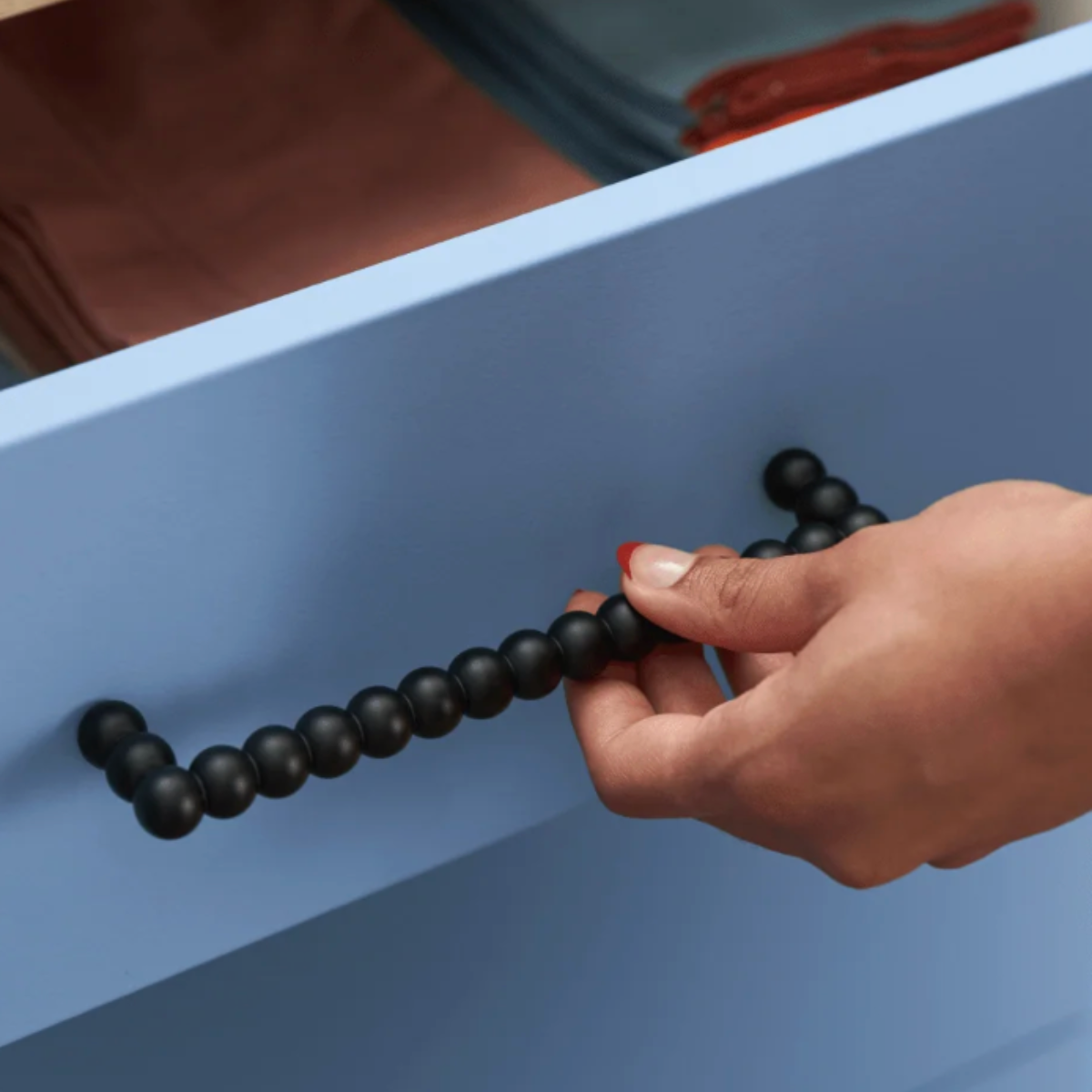
How to Measure for Cabinet Pulls
Cabinet pulls mount with two screws, so both C-to-C spacing and orientation matter.
- Cabinet doors: Mount pulls vertically, roughly 2 1/2"–3" from the top edge on upper cabinets, and 2 1/2"–3" from the bottom edge on lower cabinets, aligned with the lead corner.
- Narrow drawers (under 24" wide): Center a single pull horizontally on the drawer face, mounted horizontally.
- Wide drawers (24" and up): Use two pulls, each placed 3"–6" in from the drawer's outer edges for both support and visual balance.
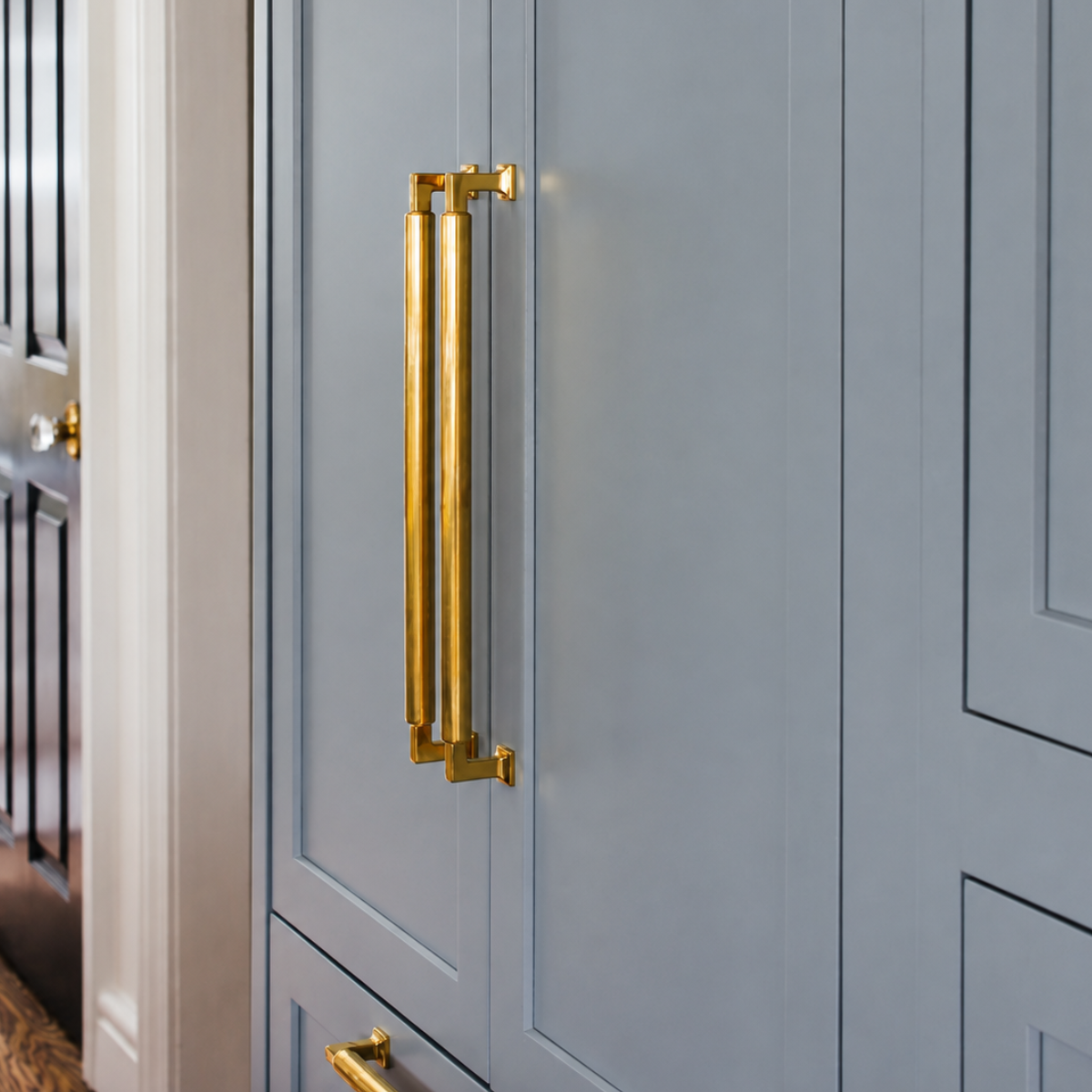
How to Measure for Appliance Pulls
Appliance pulls follow the same C-to-C principle as cabinet pulls, but come in much longer overall lengths to suit refrigerator panels, dishwasher fronts, and trash pull-outs.
- Measure the C-to-C spec of your appliance panel's existing pull, or the manufacturer's pre-drilled holes if this is a new panel install.
- Center the pull both horizontally and vertically on the panel unless the appliance manufacturer specifies otherwise.
- Confirm weight rating on longer appliance pulls (30" and up) — they need secure mounting given their length and daily use.
| Cabinet / Drawer Type | Recommended Knob Placement | Recommended Pull Placement |
|---|---|---|
| Upper cabinet doors | 2 1/4"–3" from bottom, lead corner | 2 1/2"–3" from bottom edge, vertical |
| Base cabinet doors | 2 1/4"–3" from top, lead corner | 2 1/2"–3" from top edge, vertical |
| Narrow drawers (<24") | Centered on face | Single pull, centered horizontally |
| Wide drawers (24"+) | Not typically used alone | Two pulls, 3"–6" from each edge |
| Appliance panels | N/A | Centered, per manufacturer spec |
Common Measuring Mistakes to Avoid
- Measuring overall length instead of C-to-C on two-hole pulls — this is the single most common ordering error.
- Mixing placement rules within the same room, which reads as visually inconsistent even if each piece is technically level.
- Not accounting for door/drawer thickness when ordering mounting screws for thicker custom cabinetry.
- Skipping a test hole on an inconspicuous cabinet before drilling the whole kitchen.
Frequently Asked Questions
What is center-to-center (C-to-C) measurement and how do I find it on my existing hardware?
What is center-to-center (C-to-C) measurement and how do I find it on my existing hardware?
C-to-C is the distance between the centers of a pull's two mounting holes. Measure from the middle of one screw hole to the middle of the other — not the pull's total length — using a tape measure or ruler.
How far from the edge of a cabinet door should a knob be placed?
How far from the edge of a cabinet door should a knob be placed?
Most knobs are placed 2 1/4" to 3" from both the top/bottom edge and the side edge of the door, positioned on the corner nearest the opening side.
Do I need one or two pulls on a wide drawer?
Do I need one or two pulls on a wide drawer?
Drawers 24" wide or wider typically use two pulls, spaced 3" to 6" in from each edge, for both visual balance and added support. Drawers under 24" generally use a single centered pull.
Can I reuse existing screw holes when replacing hardware?
Can I reuse existing screw holes when replacing hardware?
Yes, as long as the new hardware's C-to-C spacing matches your existing holes exactly. If the spacing differs, you'll need to fill the old holes and drill new ones.
How do I measure for appliance pulls, and are they different from cabinet pulls?
How do I measure for appliance pulls, and are they different from cabinet pulls?
Appliance pulls use the same C-to-C measuring method as cabinet pulls but come in much longer overall lengths for refrigerator, dishwasher, and trash-pullout panels. Measure the existing C-to-C spacing, or follow the appliance manufacturer's pre-drilled spec for new installs.
What tools do I need to measure cabinet hardware accurately?
What tools do I need to measure cabinet hardware accurately?
A metal ruler or tape measure, painter's tape for marking placement, a pencil, and — if you're placing hardware for the first time — a center-finding ruler to keep everything symmetrical.
Still Have Questions?
At New York Hardware, we believe the smallest details make the biggest impact. With a curated selection of cabinet hardware from artisans around the world, we’re here to help you get those details right.
If you're unsure about sizing or placement, visit or call our Costa Mesa showroom. Our team will guide you through the process, helping you find hardware that fits beautifully and functions effortlessly with your cabinetry.
The right measurement is the first step toward a finished look that feels custom, considered, and easy to use.


