


Door Hardware Functions Explained: Passage, Privacy, Dummy & Keyed Entry
You have picked a knob you love. You have settled on a finish. Then the product page asks you to choose a function — passage, privacy, dummy, single dummy or keyed entry — and it is not obvious which one your door needs.
Function is the single most consequential choice on that page. Finish is aesthetic and reversible. Function is mechanical: it determines whether the knob turns, whether it locks, whether it needs holes drilled in your door, and whether the door will even stay shut. Order the wrong one and you
are shipping it back.
Here is what each function does and which doors it belongs on.
Dummy
No latch — surface mounted
Passage
Turns freely, never locks
Privacy
Locks from inside
Single dummy
One side only
Keyed entry
Locks with a key
The five door hardware functions, shown in plan view through the door.
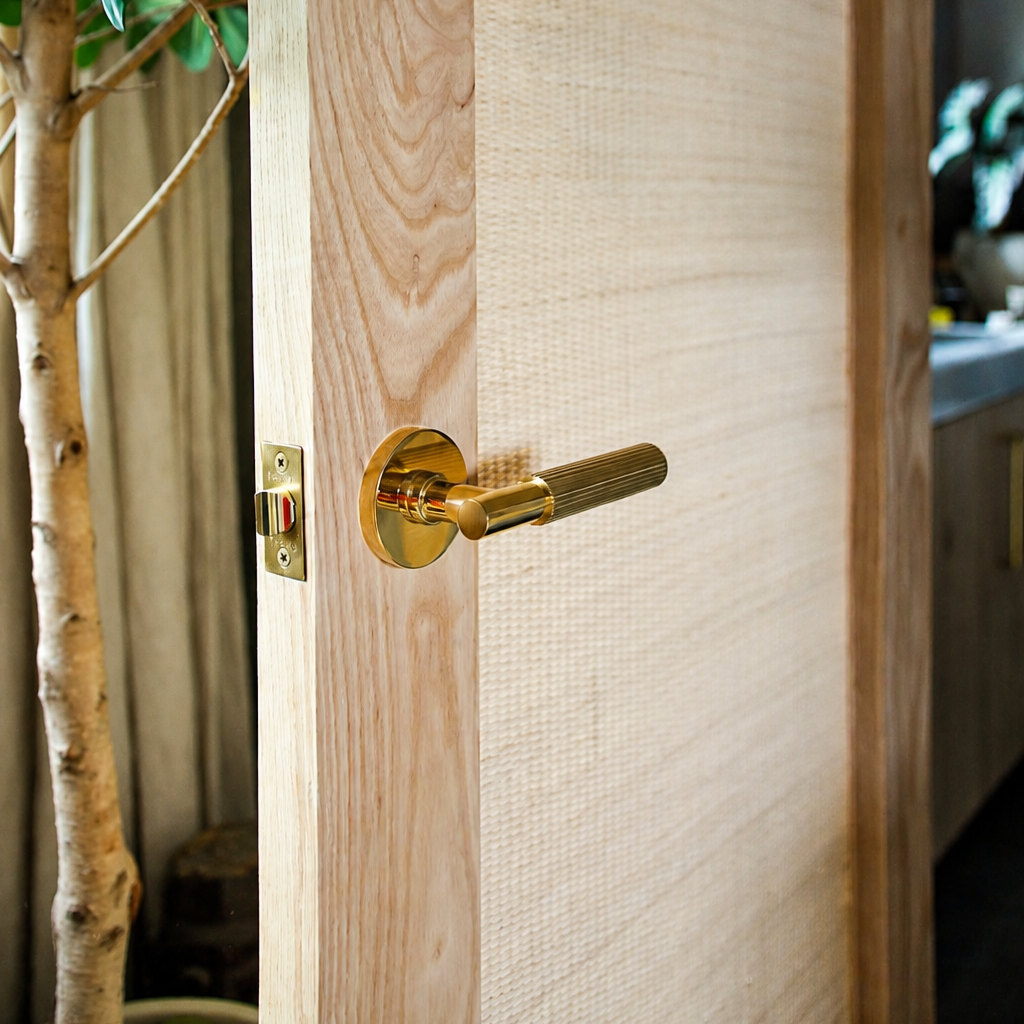
Passage Function: Turns Freely, Never Locks
A passage set has a working latch but no locking mechanism at all. Turn the knob or push the lever from either side and the door opens. The latch is what holds the door closed against the strike plate in the jamb.
This is the workhorse function in most homes. Any interior door that needs to stay shut but never needs to lock takes a passage set.
Use it on: hallway doors, linen and coat closets, pantries, laundry rooms, mudrooms, playrooms, and any door between two shared living spaces.
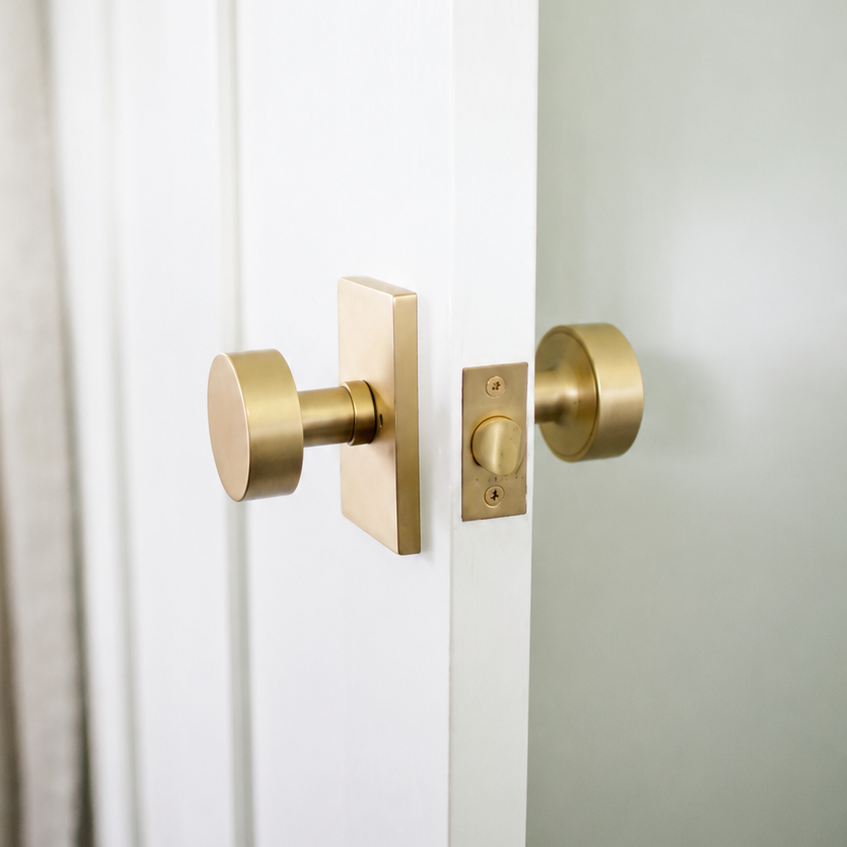
Privacy Function: Locks From the Inside
A privacy set is a passage set plus a simple interior lock — either a push button or a small turn button on the inside rose. It locks from within the room only. There is no key.
Critically, every privacy set includes an emergency release on the outside: a small slot or pinhole that lets you unlock the door from the hallway with a flathead screwdriver, a coin, or the release tool that ships in the box. This is what makes privacy sets safe for bathrooms and children's bedrooms — nobody gets locked in.
Use it on: bathrooms, powder rooms, bedrooms, home offices, and any interior door where someone needs to not be walked in on.
Quick check: privacy sets are not security hardware. The interior button stops a door from being opened casually; it does not resist force, and the outside release is designed to be easy to use. Anything that genuinely needs securing wants a keyed function or a deadbolt.
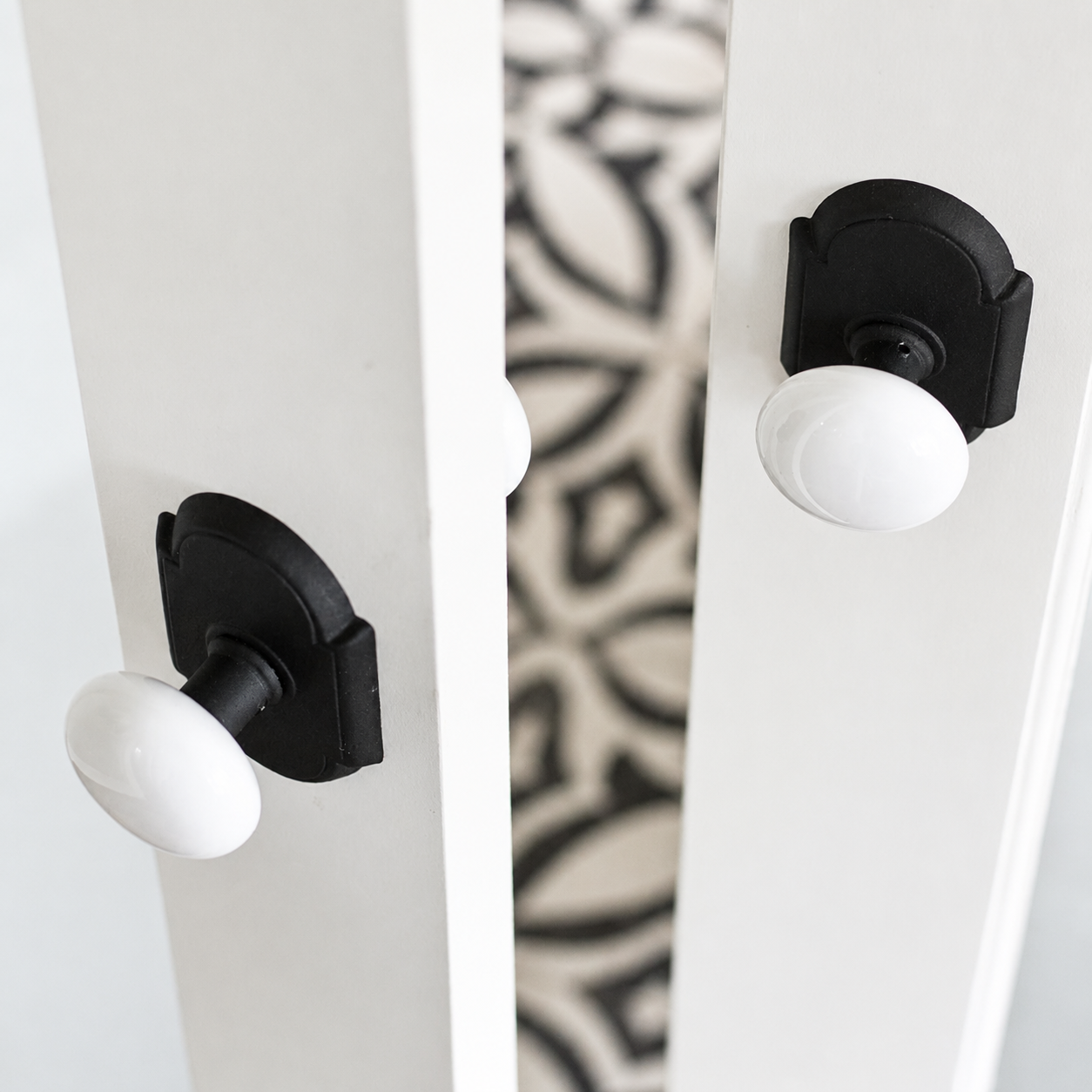
Dummy Function: Decorative, With No Working Mechanism
A dummy set does not turn and has no latch. It is a solid knob or lever mounted flat to the door face — a handle to pull on, nothing more. A dummy set is sold as a pair, one for each side of the door.
Because there is no latch, a dummy set cannot hold a door closed on its own. The door needs a separate catch — a ball catch, roller catch, or magnetic catch — installed at the top or edge of the door. This is the detail people most often miss, and it is why a dummy order should usually include a catch.
The upside: no bored holes. A dummy set surface mounts, so it can go anywhere on the door face and does not need the 2⅛" cross bore that working functions require.
Use it on: the inactive leaf of French or double doors, closet doors held by a catch, and pantry doors where the appearance of matching hardware matters more than the mechanism.
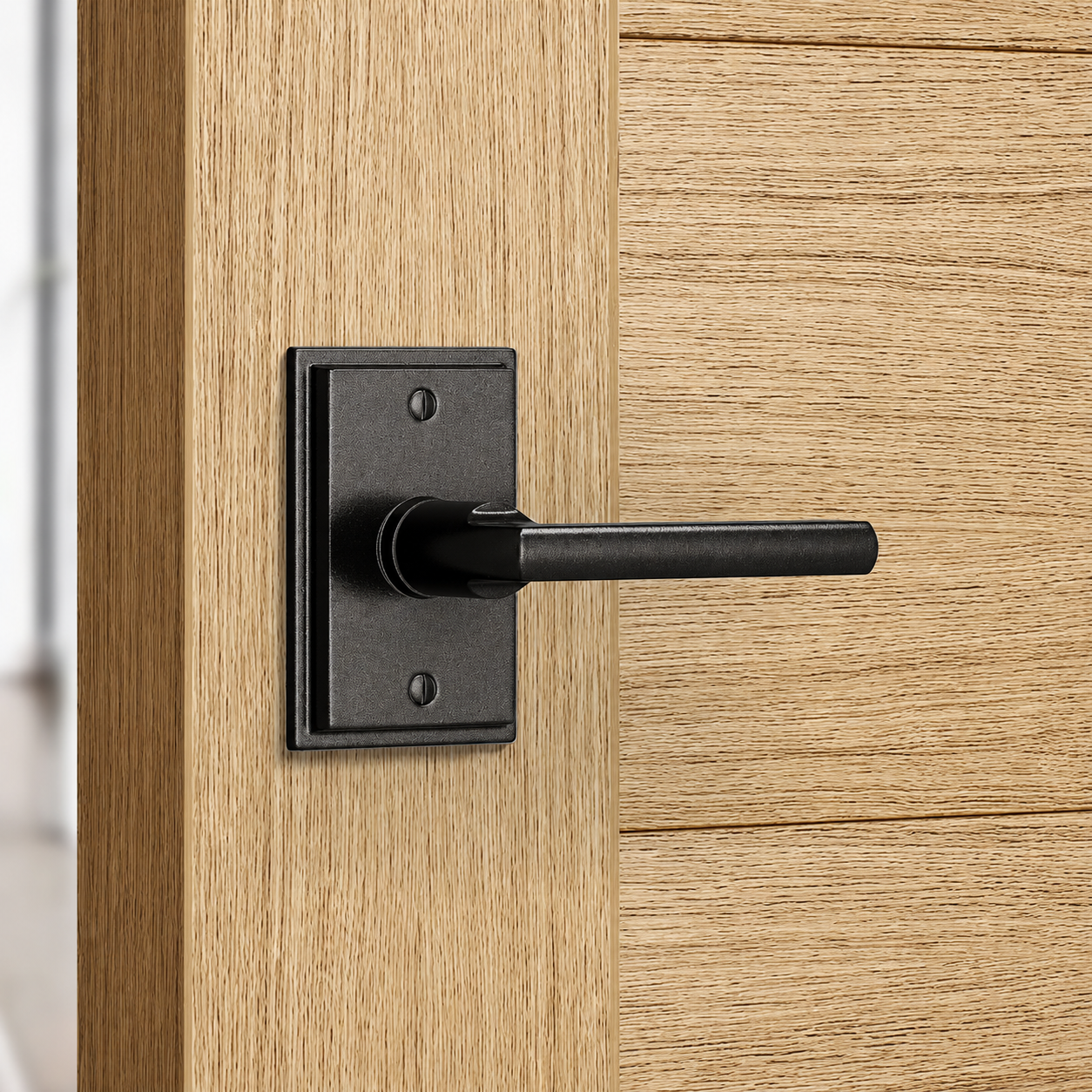
Single Dummy: The Same Thing, Sold One at a Time
A single dummy is one knob or lever for one face of the door. That is the entire difference — a dummy set is a matched pair, a single dummy is half of one.
The distinction matters more than it sounds, because ordering a dummy pair when you needed one knob means paying roughly double, and ordering a single dummy for a door that shows both faces leaves you with a bare back side.
Use it on: a closet door you only ever pull from the room side; the visible face of a double door where the back is inside a cabinet or against a wall; a bifold or barn door needing a single pull.
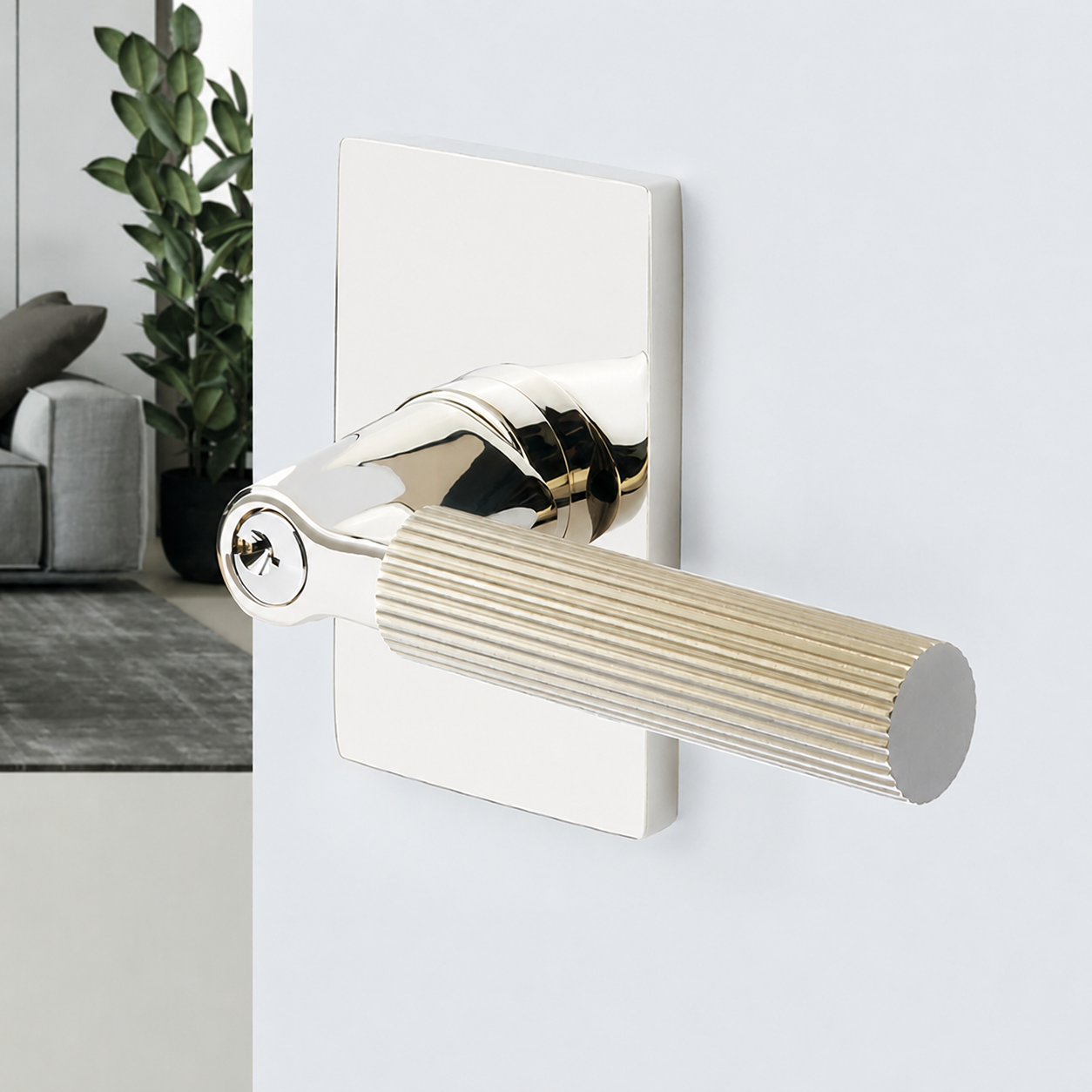
Keyed Entry Function: Locks With a Key From Outside
A keyed entry set has a key cylinder in the outside knob or lever and a turn button or thumbturn inside. It is the only interior-style function that locks against someone who is not in the room.
On a front or back door, keyed entry hardware is usually part of an entry set and is paired with a separate deadbolt — the knob handles day-to-day latching, the deadbolt does the actual security work. If you are buying several keyed doors, ask about keying them alike so one key opens all of them.
Use it on: exterior doors, garage-to-house doors, home offices, wine rooms, storage rooms, and anywhere a door needs to lock behind you.
Door Hardware Functions Compared
| Function | Does it turn? | Does it lock? | Sold as | Needs door bored? | Typical doors |
|---|---|---|---|---|---|
| Passage | Yes | No | Pair | Yes | Halls, closets, pantries, laundry |
| Privacy | Yes | From inside, no key | Pair | Yes | Bathrooms, bedrooms, offices |
| Dummy | No | No | Pair | No — surface mounts | French door inactive leaf, closets |
| Single dummy | No | No | Single | No — surface mounts | One-sided closet and bifold doors |
| Keyed entry | Yes | With a key, from outside | Pair | Yes | Exterior, garage, lockable rooms |
How to Count Functions for a Whole House
Walking the house door by door with a notepad takes about fifteen minutes and prevents nearly every ordering mistake.
For each door, ask two questions in order:
- Does this door need to latch shut? If no, it is a dummy or single dummy — and note whether you need one knob or two.
- Does it need to lock, and against whom? Nobody means passage. Someone in the hallway means privacy. Someone outside the house means keyed entry.
A typical three-bedroom, two-bath home lands somewhere near: two to three privacy sets for the baths, three privacy for the bedrooms, four to six passage for halls and closets, one or two dummy pairs for French or double doors, and two keyed exterior doors.
Worth knowing: most quality brands offer the same knob or lever style in every function, so a passage set on the hallway and a privacy set on the bathroom look identical from the outside. You can keep one style and finish across the entire house and vary only the mechanism — which is exactly how designers specify hardware.
Three Mistakes Worth Avoiding
- Ordering dummy hardware without a catch. The door will swing open. Add a ball, roller, or magnetic catch to the same order.
- Assuming function is changeable later. It is not a swap — a passage set has no locking mechanism to enable. Function is chosen per door at purchase.
- Using privacy hardware as security hardware. The outside emergency release is intentionally easy to operate. Use keyed entry or a deadbolt where security actually matters.
Not Sure Which Function You Need?
Tell us what the door does and we will tell you what to order. Our team specifies door hardware every day, and a two-minute conversation is faster than a return.
Call (800) 636-3417 or email shop@nyhardware.com
Monday–Friday, 9am–5pm PST · Showroom at 1603 Superior Avenue, Costa Mesa, CA
Shop door knobs · Shop door levers · Shop entry sets · Shop deadbolts · Browse all door hardware
Frequently Asked Questions
What is the difference between a passage and a privacy door knob?
What is the difference between a passage and a privacy door knob?
A passage knob turns freely from both sides and has no locking mechanism — it is used on hallways and closets. A privacy knob adds a push button or turn button on the inside that locks the door from within the room, with an emergency release on the outside. Privacy knobs use no key and are used on bathrooms and bedrooms.
What is a dummy door knob used for?
What is a dummy door knob used for?
A dummy knob is decorative and non-functional — it does not turn and has no latch. It surface mounts to the door face and is used where you need something to pull on but no mechanism: the inactive leaf of French or double doors, closet doors, and pantry doors. Because there is no latch, the door needs a separate ball, roller, or magnetic catch to stay closed.
What is the difference between a dummy and a single dummy?
What is the difference between a dummy and a single dummy?
A dummy set includes two knobs or levers, one for each face of the door. A single dummy is one knob or lever for one face only. Choose single dummy when only one side of the door is visible or used, such as a closet door you pull from the room side.
Can a privacy door knob be unlocked from the outside?
Can a privacy door knob be unlocked from the outside?
Yes. Every privacy set includes an emergency release on the exterior side — usually a small slot or pinhole that can be turned with a flathead screwdriver, a coin, or the tool included in the box. This is a safety requirement so nobody can be locked inside a bathroom or bedroom.
Do I need to drill my door for every function?
Do I need to drill my door for every function?
No. Passage, privacy, and keyed entry all have working latches and require a bored door — typically a 2⅛" cross bore through the face and a 1" edge bore. Dummy and single dummy sets surface mount and need no bore at all, which makes them useful on doors that were never prepped.
Can I change a passage knob into a privacy knob later?
Can I change a passage knob into a privacy knob later?
No. The locking mechanism is built into the set, so a passage knob has nothing to enable. Function is selected when you order, per door. If you need a door to lock later, you replace the set — which is why it is worth deciding function door by door before ordering.


