


Lacquered vs. Unlacquered Finishes: What's the Difference?
When you're choosing decorative hardware, selecting the finish does more than set the color and sheen. Your finish also decides how your hardware will look five, ten, or twenty years from now. Beyond the metal and the maker, there's one decision that shapes everything else: do you want your hardware to stay exactly as it is today, or do you want it to change and gain character as it ages?
That's the real question behind lacquered vs. unlacquered finishes. Below, we break down what each option actually is, how they perform over time, and how to decide which one fits your home.
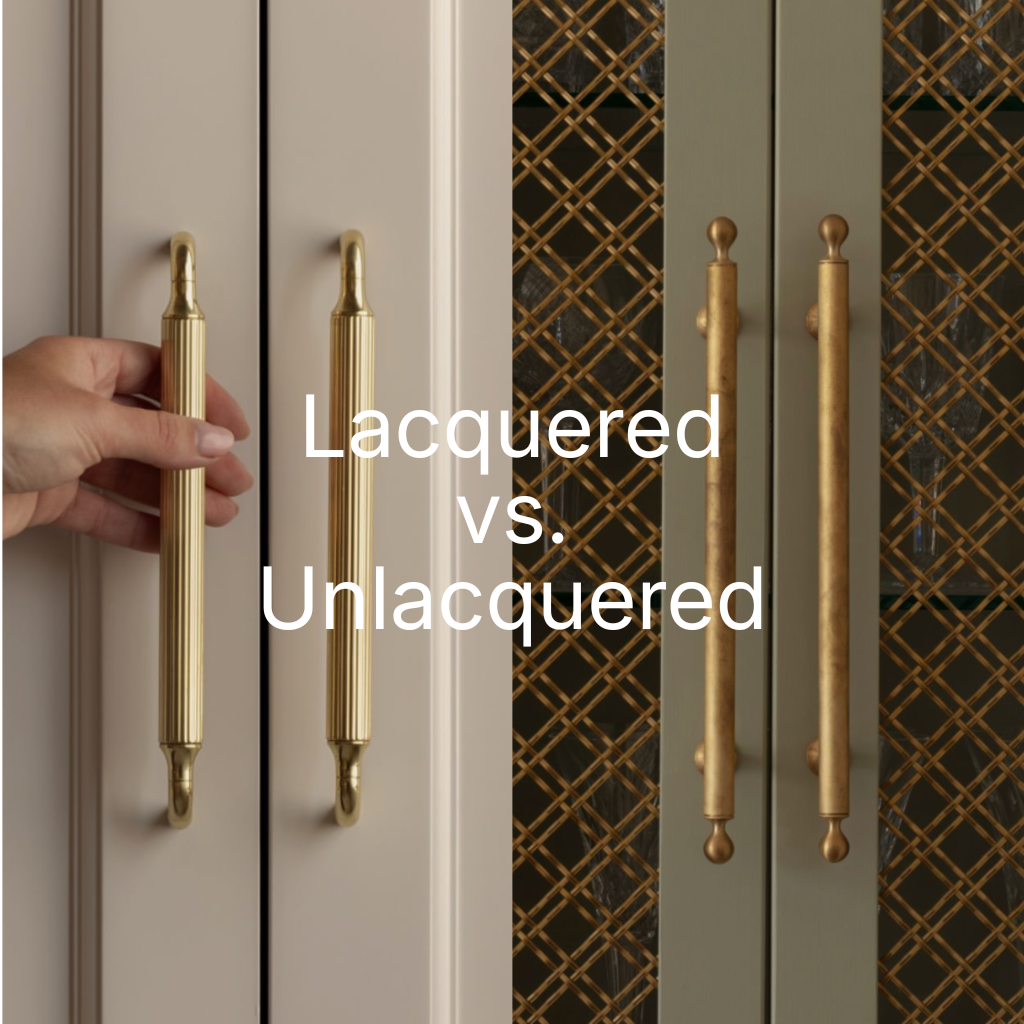
Lacquered vs. Unlacquered: The Quick Answer
- Lacquered hardware has a clear protective topcoat that locks in a consistent, just-installed shine and resists tarnish.
- Unlacquered hardware is raw, uncoated metal — usually brass or bronze — that's left to react naturally with air, moisture, and touch, developing a living patina over time.
Neither finish is objectively "better." The right choice depends on whether you want hardware that looks the same forever, or hardware that ages and tells a story.
What Is a Lacquered Finish?
A lacquered finish is exactly what it sounds like: a clear protective coating applied over the metal after it's polished or plated. That coating creates a barrier between the metal and the air, moisture, and oils from your hands. This barrier is what keeps the surface underneath from changing.
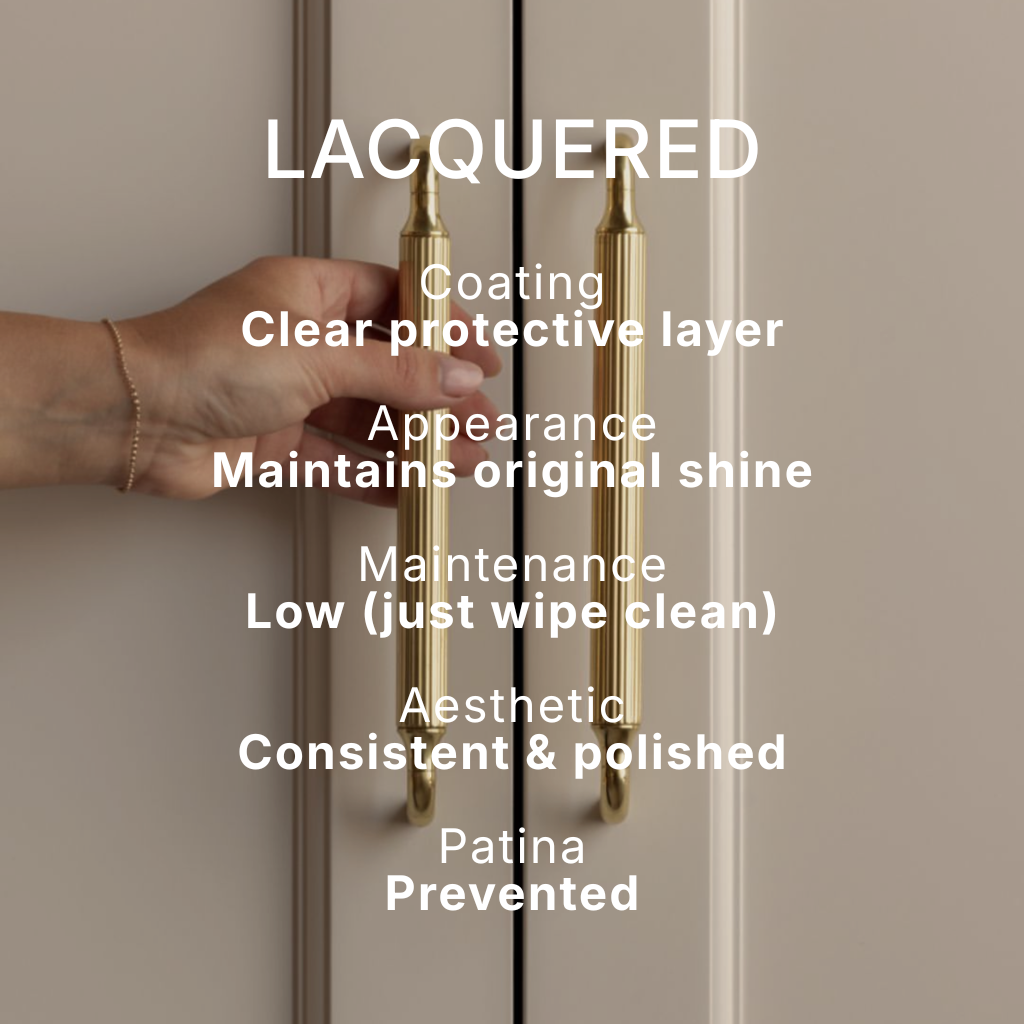
- Protection from tarnish and oxidation: the lacquer seals out air and moisture, so the metal underneath doesn't react.
- Consistent appearance: it locks in that "just-installed" look for years, with no darkening or spotting.
- Low maintenance: a quick wipe with a soft cloth is all it needs to stay looking sharp.
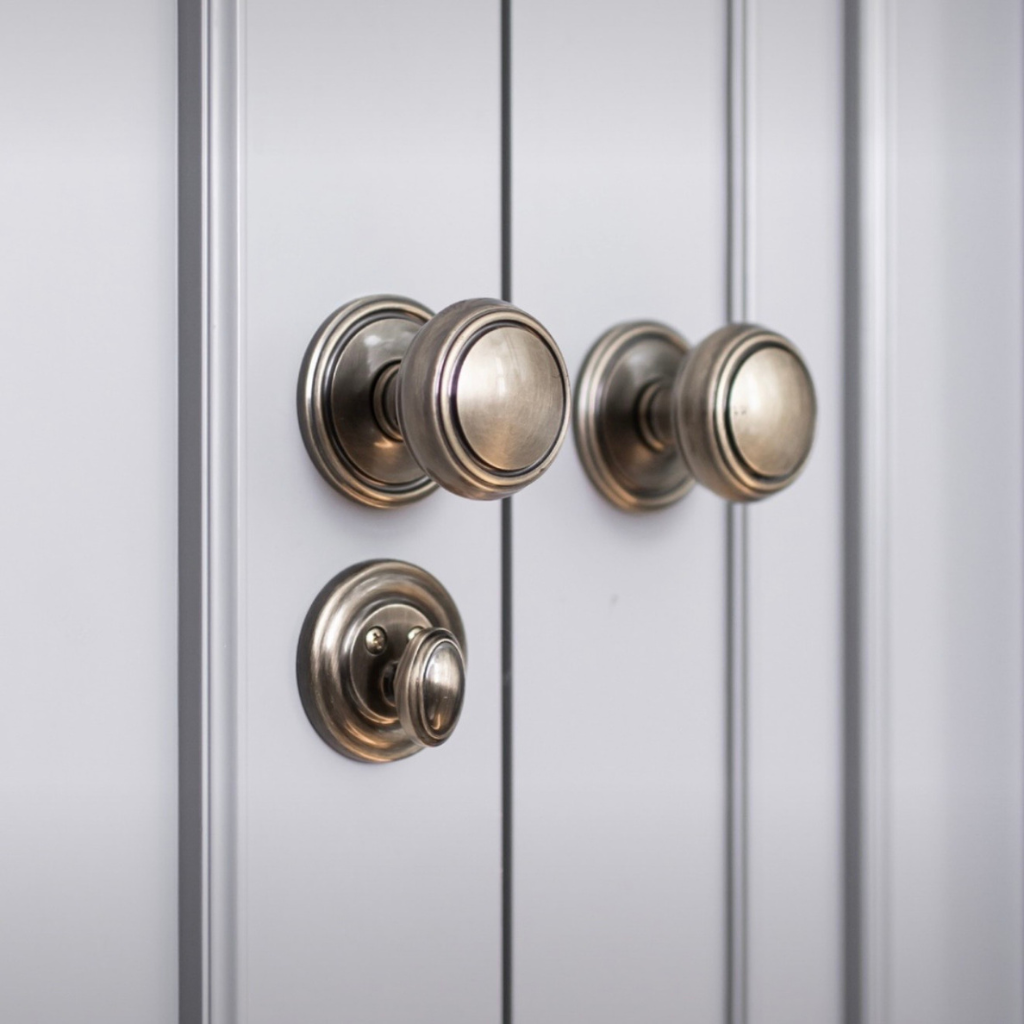
Lacquered finishes are the right call if you love a polished, uniform look that won't shift with time. They're especially popular on cabinet hardware, door hardware, and decorative fixtures where a homeowner wants the finish to look the same on day one and year ten. This could include polished brass cabinet hardware in a kitchen that gets heavy daily use or polished brass door hardware in the main entryway of the home.
What Is an Unlacquered Finish?
Unlacquered hardware is raw metal most often made from brass or bronze. This raw metal is left uncoated so it can react naturally with air, moisture, and the oils on your hands. That reaction is what creates a patina: a gradual darkening or antiquing of the surface that's unique to every piece.
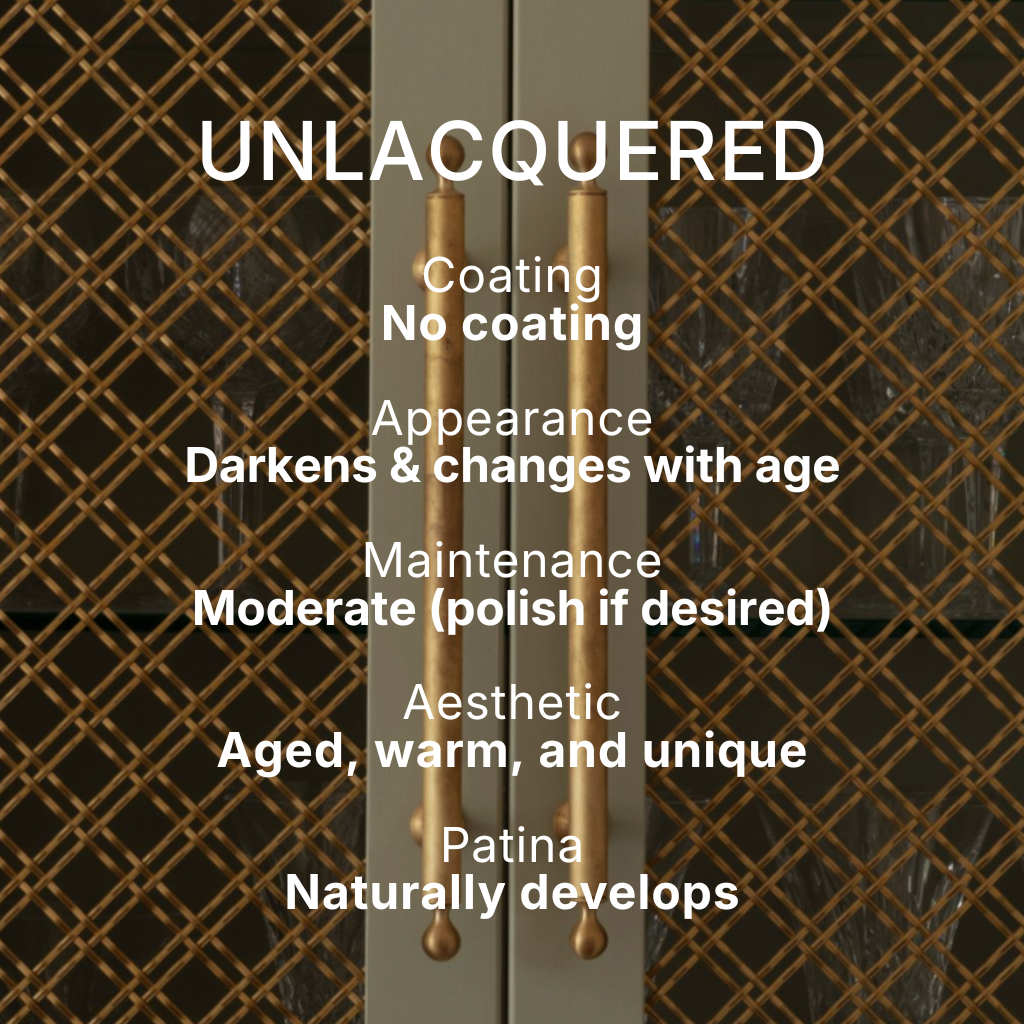
- A living finish: the metal darkens and ages naturally over months and years of use.
- Character and uniqueness: no two pieces age exactly alike, since patina develops based on handling, humidity, and environment.
- Restorable: if you ever want the original bright shine back, unlacquered hardware can be polished back to like-new condition, unlike a damaged lacquer coating.
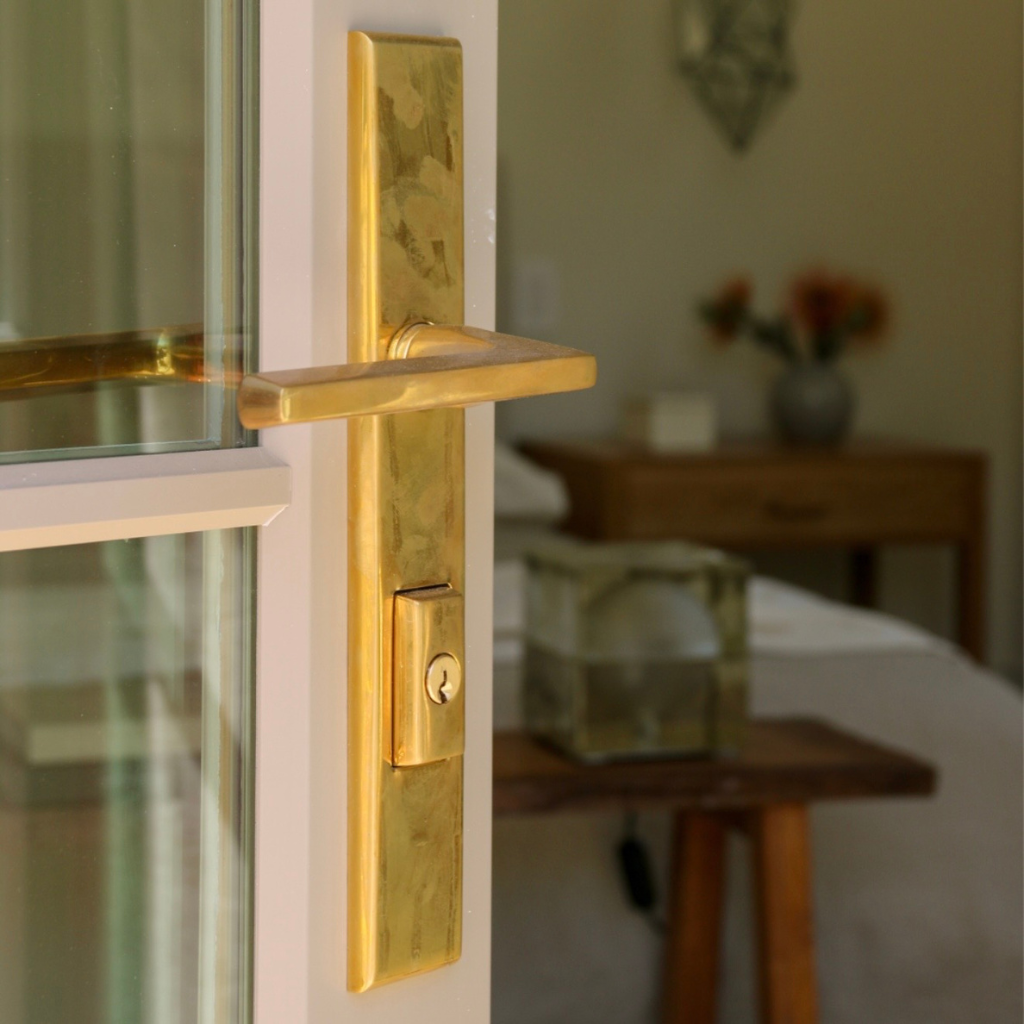
Unlacquered finishes are ideal for anyone drawn to a vintage, antique, or European farmhouse look. Unlacquered finishes are for those who don't mind (or actively love) watching the hardware evolve. It's especially popular for kitchen and bath cabinetry, entry door hardware, and architectural accents where an aged, lived-in look is the goal. Brands like Armac Martin and Baldwin are known for luxury, heritage-grade unlacquered brass options.
Lacquered vs. Unlacquered: Side-by-Side Comparison
| Feature | Lacquered | Unlacquered |
|---|---|---|
| Coating | Clear protective layer | No coating — raw metal |
| Appearance over time | Maintains original shine | Darkens and changes with age |
| Maintenance | Low — wipe clean as needed | Moderate — polish only if you want to |
| Aesthetic | Consistent, polished | Aged, warm, and one-of-a-kind |
| Patina development | Prevented by the coating | Develops naturally with use |
| Restorability | Limited once lacquer wears or is damaged | Fully restorable by polishing |
| Best for | Uniform, low-maintenance spaces | Vintage, antique, or evolving design styles |
How to Care for Each Finish
Caring for Lacquered Hardware
- Wipe clean with a soft, damp cloth.
- Avoid harsh chemicals, ammonia-based cleaners, or abrasive scrubbers — they can break down the lacquer coating.
- If the lacquer is ever chipped or worn through, that spot may begin to tarnish unevenly, since the protective seal is broken.
Caring for Unlacquered Hardware
- Expect — and welcome — color changes over time.
- If you love the aging process, simply leave it alone and let the patina develop.
- To maintain a brighter look, polish periodically with a dedicated brass or bronze cleaner and a soft polishing cloth.
- For extra protection between polishes, apply a high-quality paste wax made for brass or bronze, and reapply as needed.
Pro tip: Unlacquered brass tells a story over time. The knobs and levers you touch most often will darken differently than the ones you rarely use — which is exactly what makes each piece beautifully unique.
Which Finish Should You Choose?
Here's the simplest way to decide:
- Choose lacquered if you want a low-maintenance, always-polished look that stays consistent for years.
- Choose unlacquered if you love the idea of hardware that changes, ages, and gains character over time.
Ready to Explore Lacquered and Unlacquered Hardware?
At New York Hardware, we carry both lacquered and unlacquered options from trusted brands including Baldwin, Armac Martin, Emtek, so you can find the right finish for your project. Browse our full range of cabinet hardware finishes or our door hardware finishes to compare options side by side.
Still unsure? Stop by our Costa Mesa showroom. Our team can walk you through real samples of lacquered and unlacquered brass side by side and help you decide which finish fits your style, lifestyle, and space.
Frequently Asked Questions
What does "unlacquered brass" mean?
What does "unlacquered brass" mean?
Unlacquered brass is brass hardware that has no clear protective coating applied to it. Because the raw metal is exposed to air, moisture, and touch, it naturally develops a patina — a gradual darkening and antiquing — over time.
Does unlacquered brass tarnish?
Does unlacquered brass tarnish?
Yes, and that's by design. Unlacquered brass will darken and develop a patina as it's exposed to air and handling. Many homeowners choose unlacquered brass specifically for this aging effect. If you prefer to slow it down, periodic polishing and a brass-specific wax can help maintain a brighter finish.
Can you polish unlacquered brass back to its original shine?
Can you polish unlacquered brass back to its original shine?
Yes. Because there's no coating to damage, unlacquered brass can be polished with a brass cleaner and soft cloth to restore its original bright finish at any time — one of the biggest advantages over lacquered hardware, which can't simply be "re-shined" if the coating is compromised.
Is lacquered or unlacquered brass better for kitchens?
Is lacquered or unlacquered brass better for kitchens?
Both work well in kitchens, and the right choice comes down to preference. Lacquered brass is a great fit if you want cabinet hardware that looks freshly installed for years with minimal upkeep. Unlacquered brass is a great fit if you want your hardware to develop warmth and character as your kitchen is lived in.
How do I know if hardware is lacquered or unlacquered before buying?
How do I know if hardware is lacquered or unlacquered before buying?
Reputable retailers will specify the finish type in the product description. At New York Hardware, each product listing notes whether a finish is lacquered or unlacquered, and our team can also confirm this for any item by phone, email, or in our Costa Mesa showroom.
Does unlacquered brass need to be sealed or waxed?
Does unlacquered brass need to be sealed or waxed?
No — sealing or waxing is optional, not required. Waxing simply slows down the natural patina process and adds a layer of protection between polishes. If you want the aging process to happen freely, you can leave unlacquered brass completely untreated.
Will unlacquered brass hardware match if I install it at different times?
Will unlacquered brass hardware match if I install it at different times?
Not exactly, and that's part of its appeal. Because patina develops based on exposure, handling, and environment, pieces installed at different times — or used more or less frequently — will age at slightly different rates. Most homeowners find this adds to the organic, collected-over-time look rather than detracting from it.


